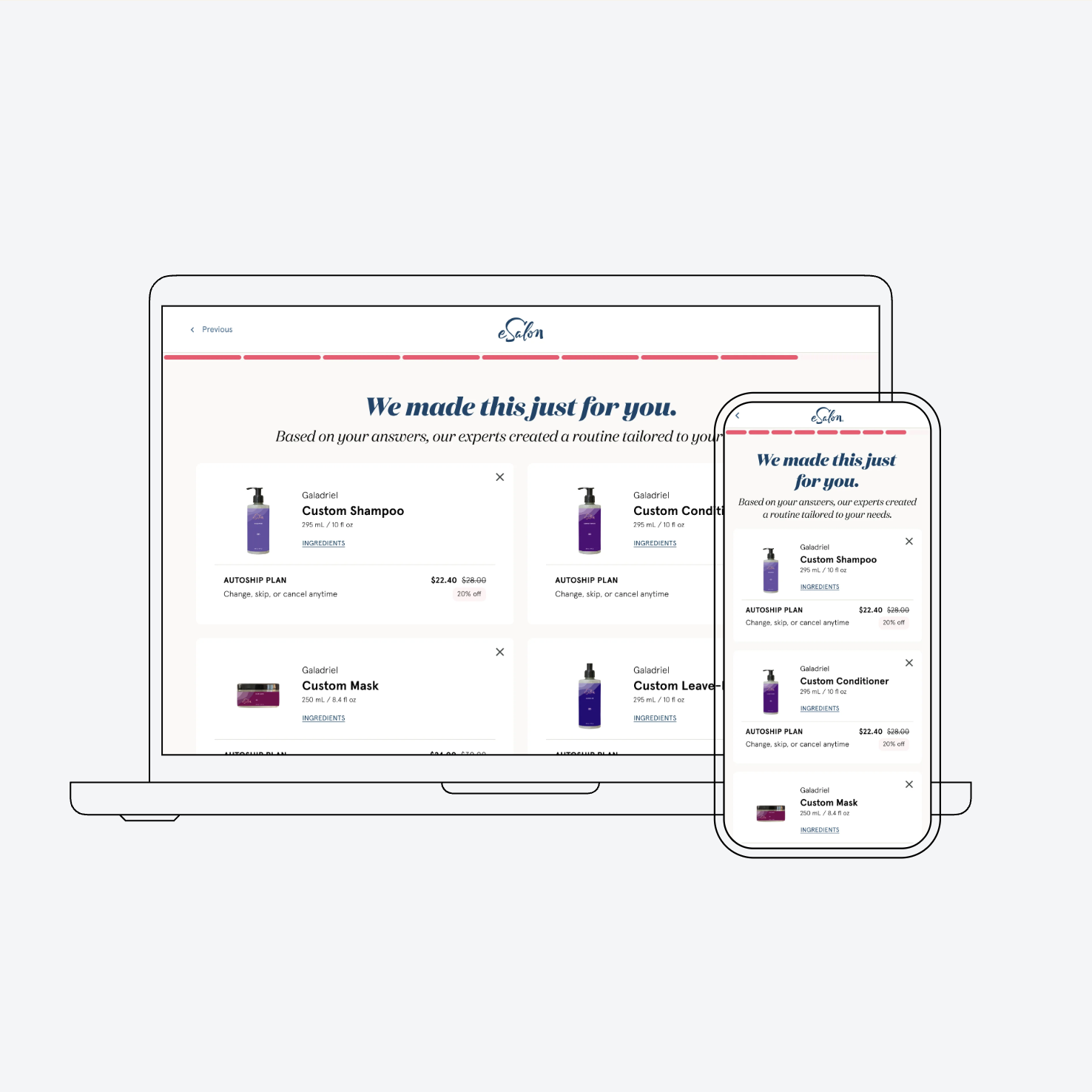
eSalon | Lead Product Designer
Personalized Hair Care Quiz
Guiding customers from more choices to the right routine.
The challenge
Personalization only works if people are willing to complete the questions that enable it.
Adding more questions can improve recommendations but risks people leaving. The difficulty was deciding which questions were worth asking, what could be deduced, and how to make each step feel like progress rather than a chore.
Halfway through the project, company layoffs eliminated Product Management and UX Research, leaving me in charge of discovery as I gathered feedback from executives in Marketing, Engineering, Customer Service, and R&D.
My approach
Instead of starting from scratch, I focused on decisions that informed the experience.
Include only the questions that matter.
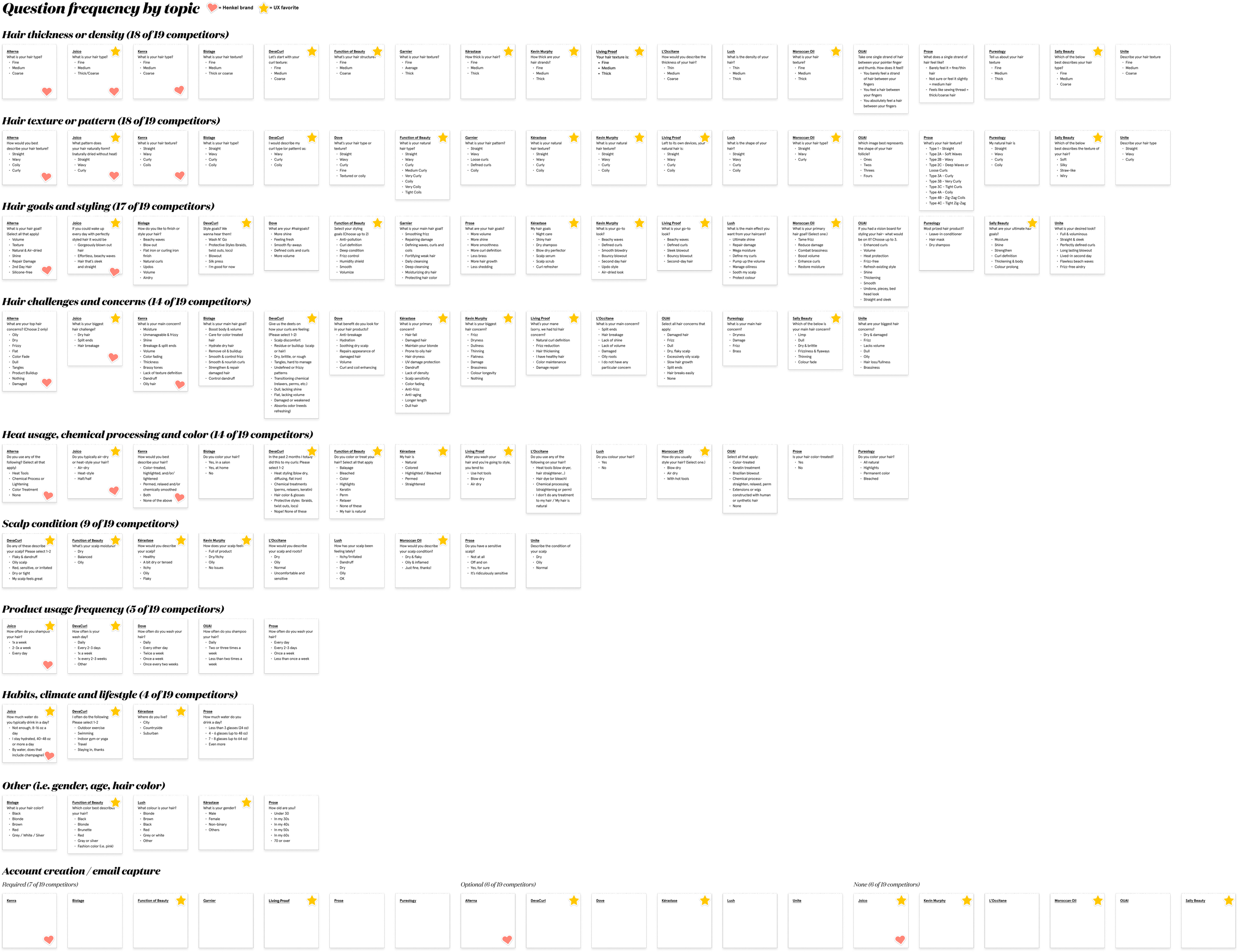
To identify which questions improved recommendations and which caused friction, I studied companies like Function of Beauty and Prose.
My competitive audit examined 19 personalization quizzes and showed that most included questions with no meaningful effect on recommendations.
Offer one quiz for three user types.
New customers, returning customers, and logged-in users all had different amounts of background information.
Instead of making everyone follow the same process, I created experiences that used existing profile data when possible and reduced unnecessary work.
Returning customers don’t want to have to prove you know them all over again.

Build on aspects that are already effective.
Customers already trusted the hair color quiz.
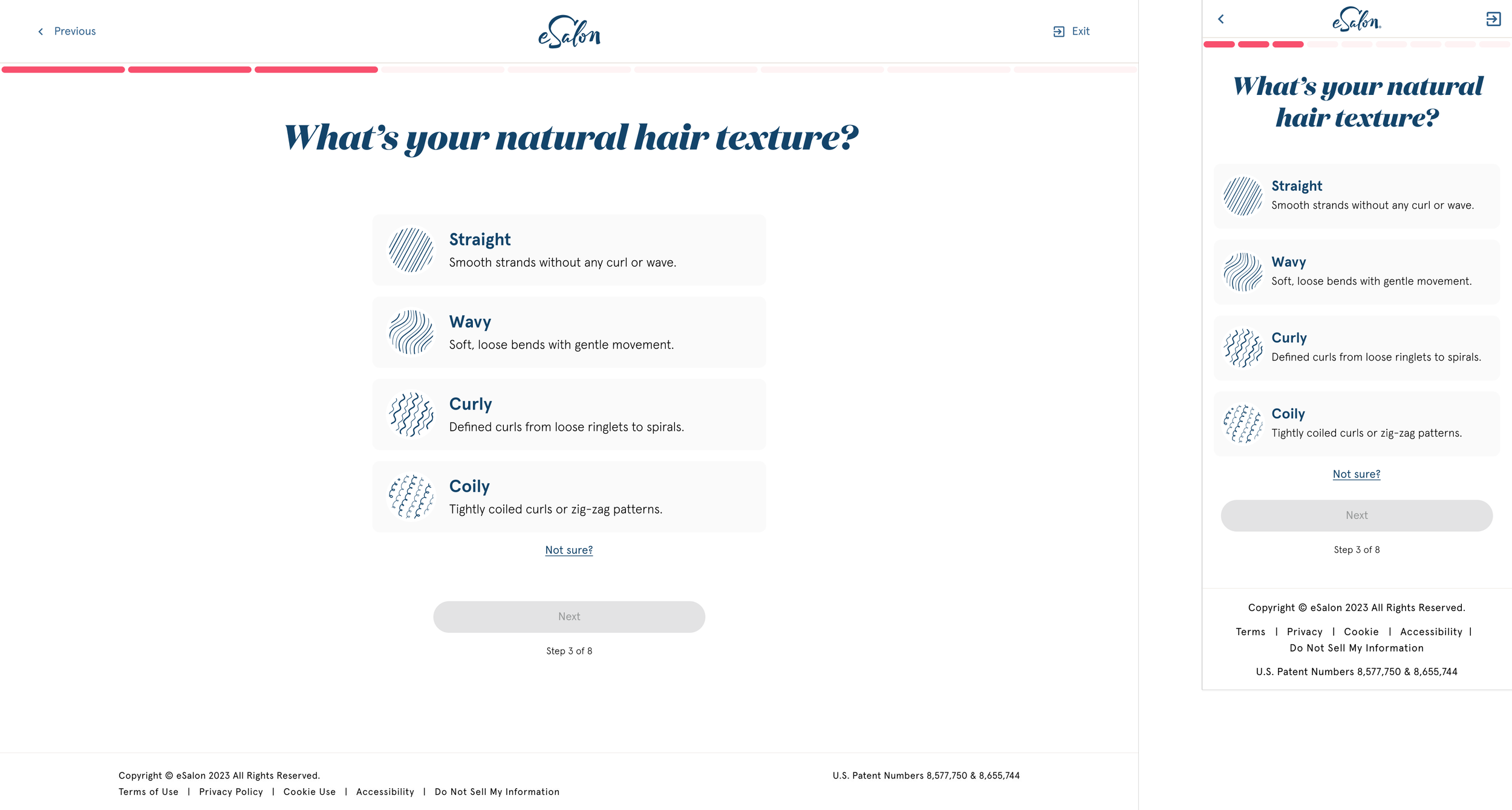
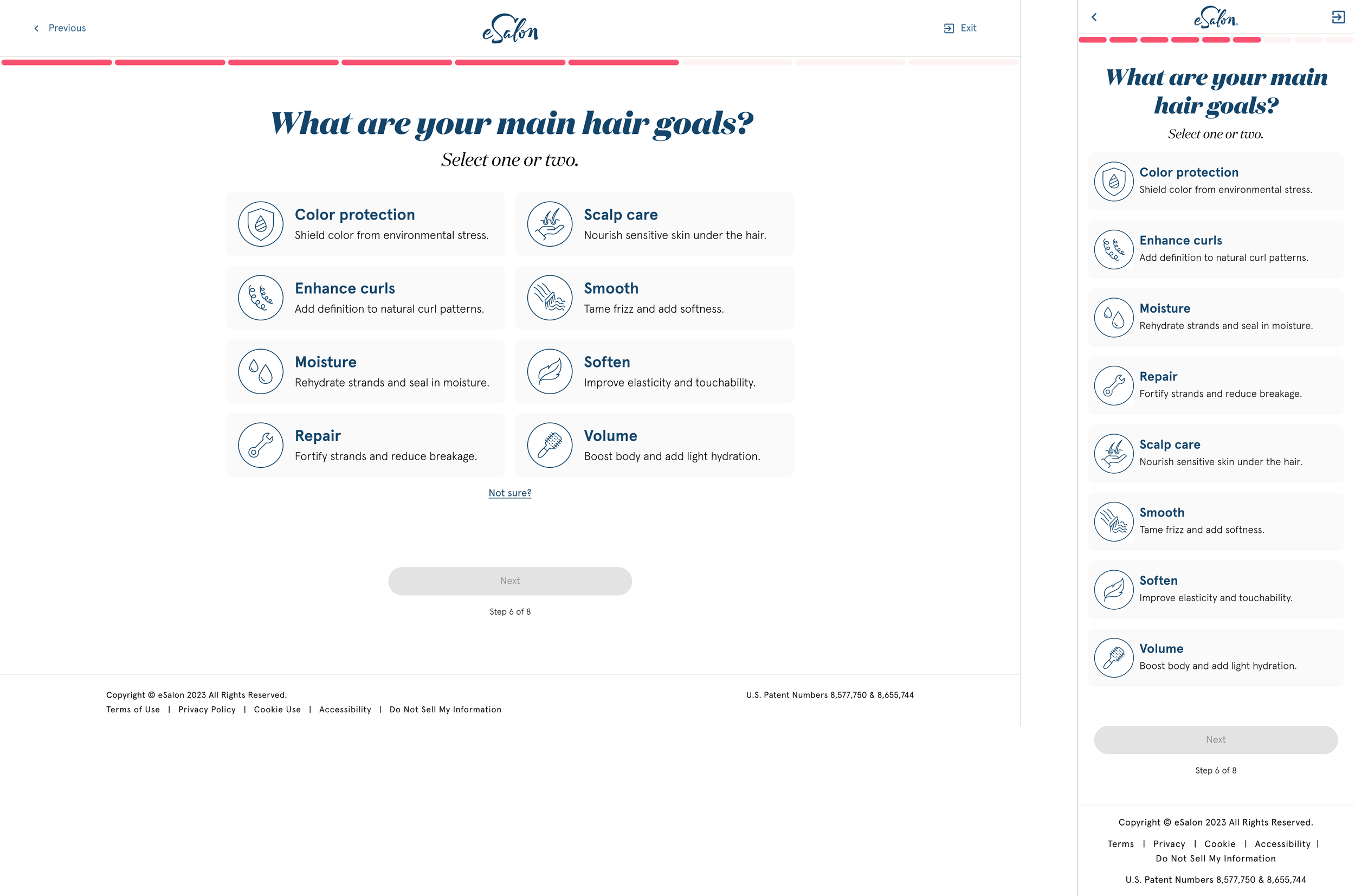
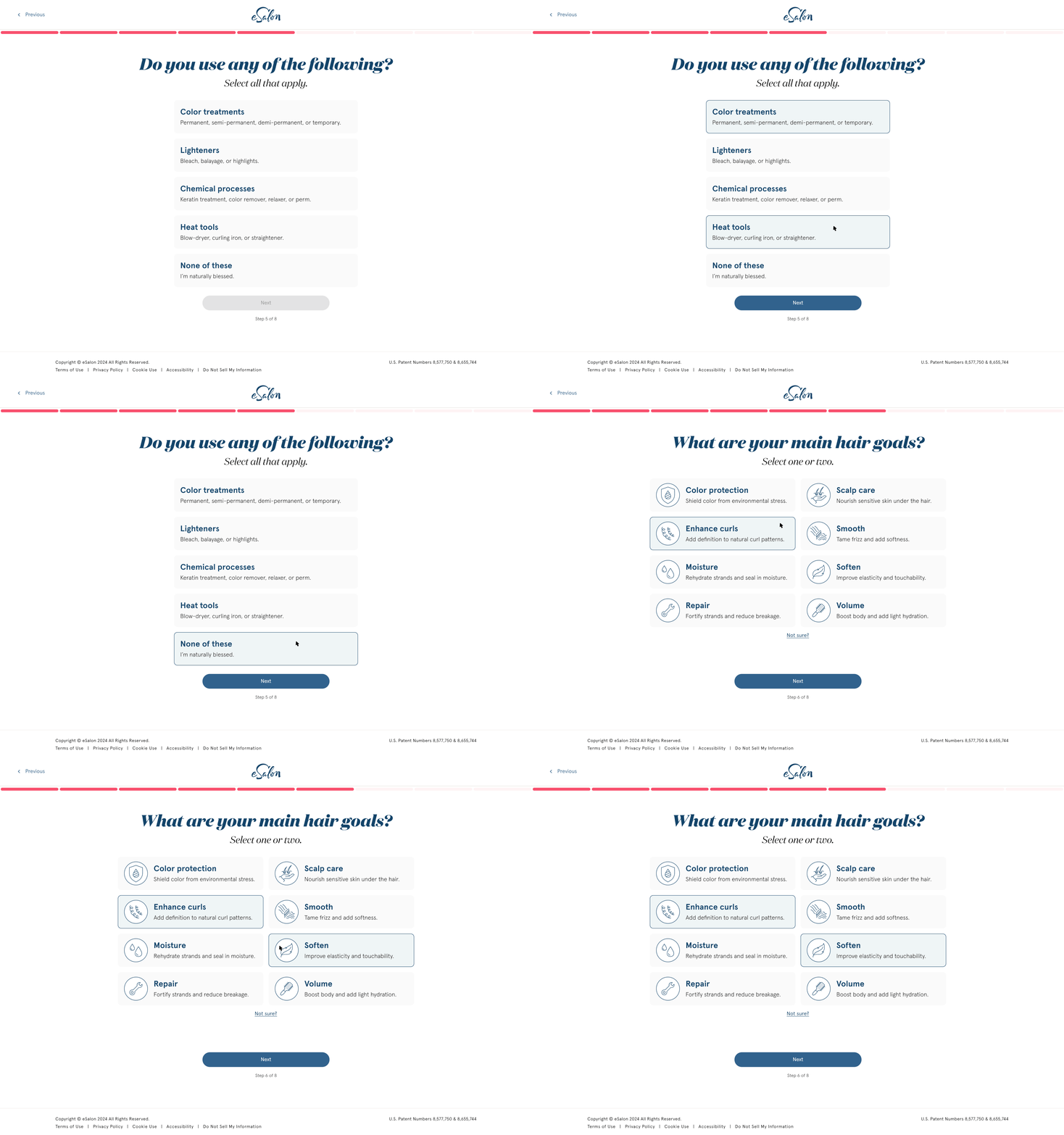
Rather than creating a new kind of experience, I used established interaction designs, incorporating progressive disclosure, simplifying decision-making, and introducing a modern interface made for hair care.
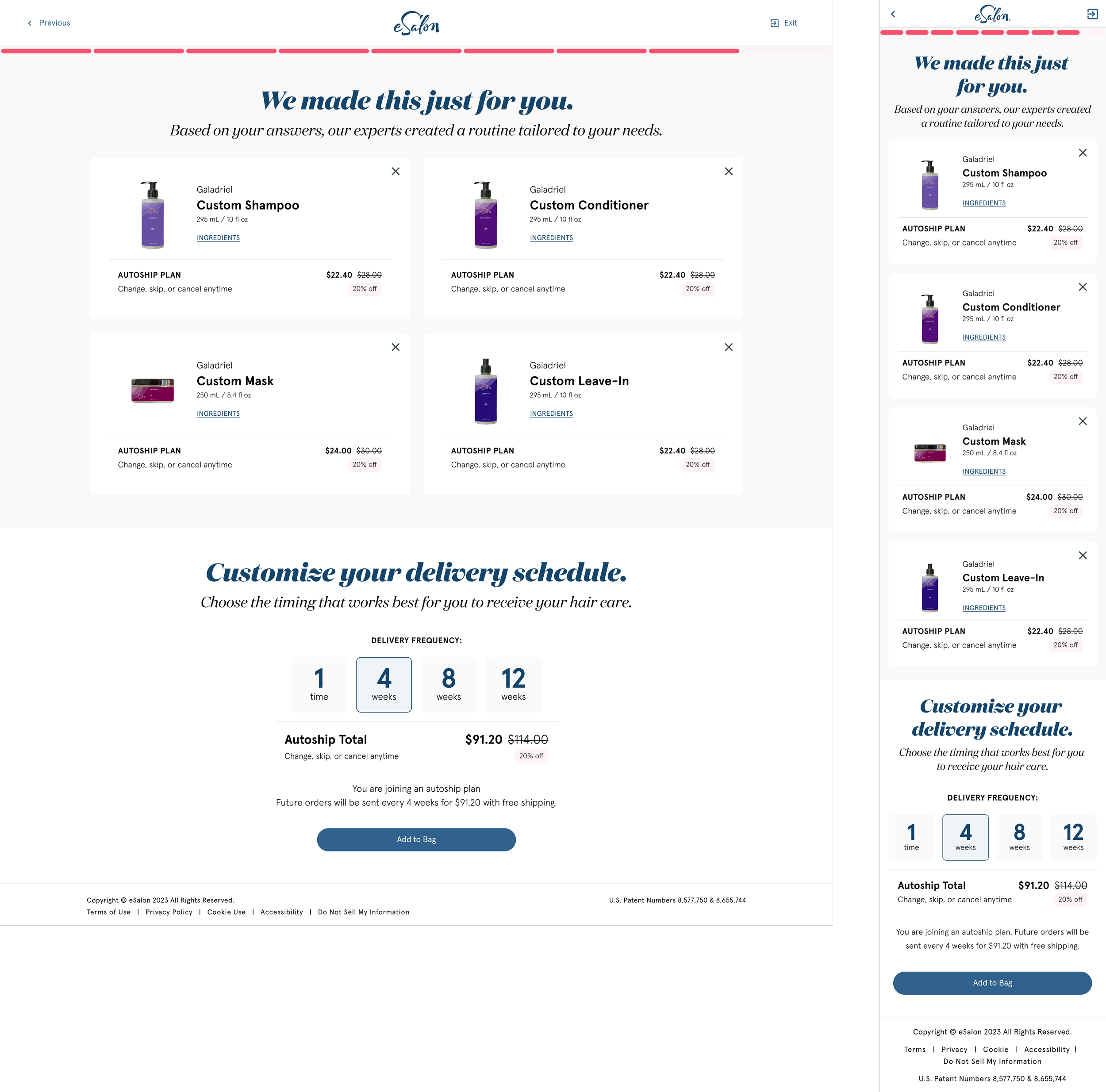
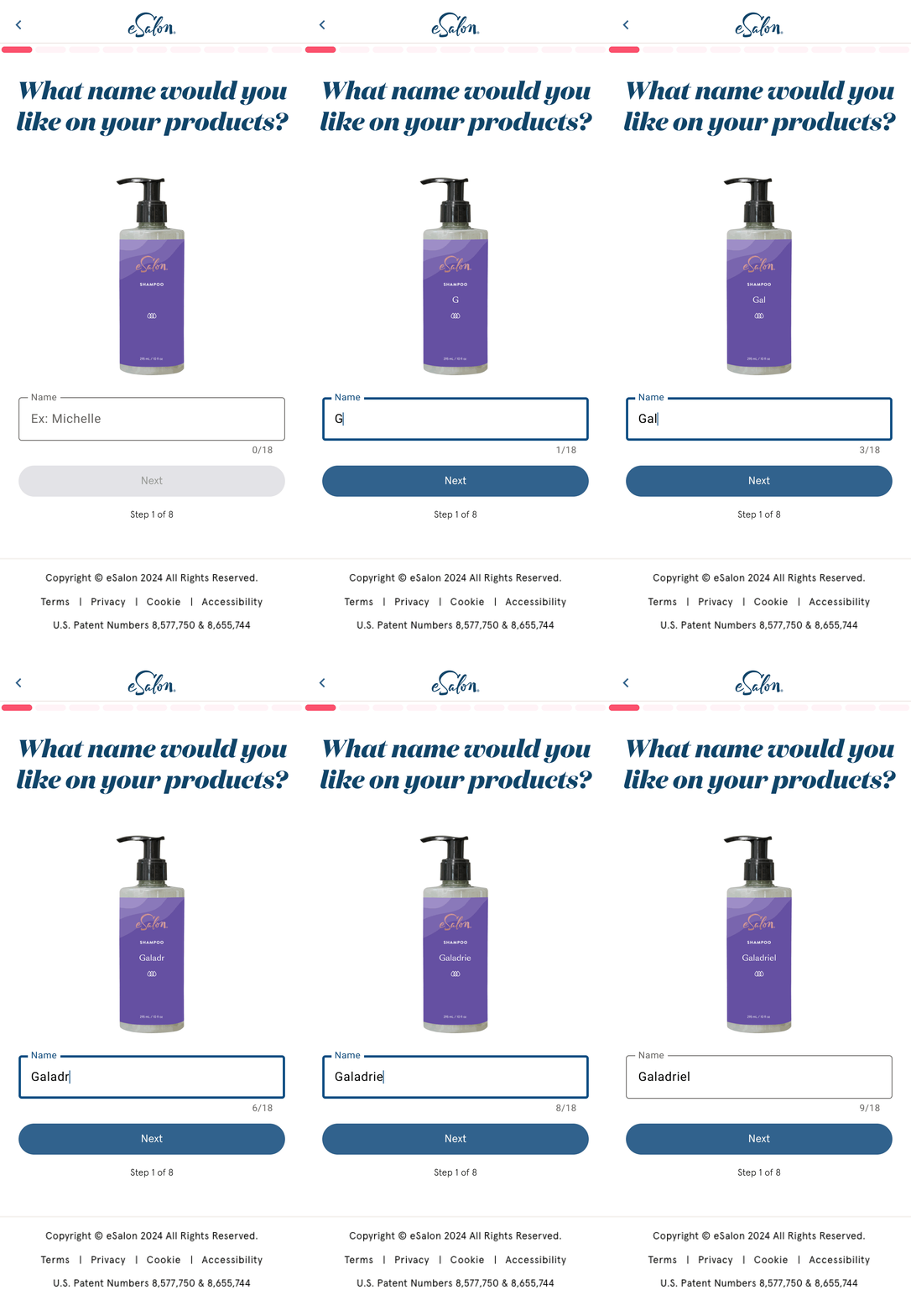
Make personalization feel genuine.
I developed interactive prototypes using Figma variables and conditional prototyping to simulate customized recommendations and branching logic.
Experiencing the product was more effective than presenting static screens and helped align stakeholders before development.
Outcome
Intentional design can turn the growing pains of scale into opportunities for stronger, more resilient systems.
This project turned one of eSalon's most successful ecommerce models into a foundation for personalized hair care recommendations. Even though company changes made it harder to improve after launch, I built the experience to scale as the product range expanded.
I learned that personalization is not about asking more questions. It’s about asking the right questions at the right time and making sure each answer feels valuable.